Swooper, flutter or sail flag?
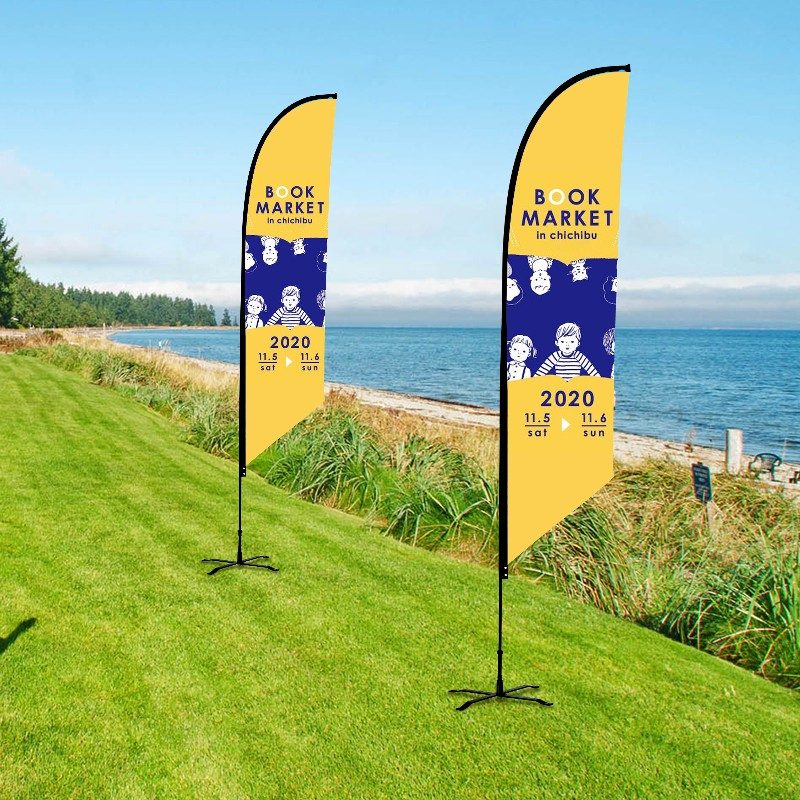
All three names describe one family of shapes: a tall flag attached along the pole, with a curved top edge cut to catch the wind. Where a teardrop or rectangle flag holds its face steady, a swooper is built to move. It flutters and swings, and that movement is what pulls a driver's eye toward a lot or a storefront.
That makes swoopers a natural fit wherever a site should look lively: a dealership on a big weekend, a garden center in spring, a pumpkin or Christmas tree lot in season, or a grand opening that needs to be seen from the road.
Movement versus reading time
A swooper's job is to be noticed. The trade-off is that a flag in motion gets read in glimpses.
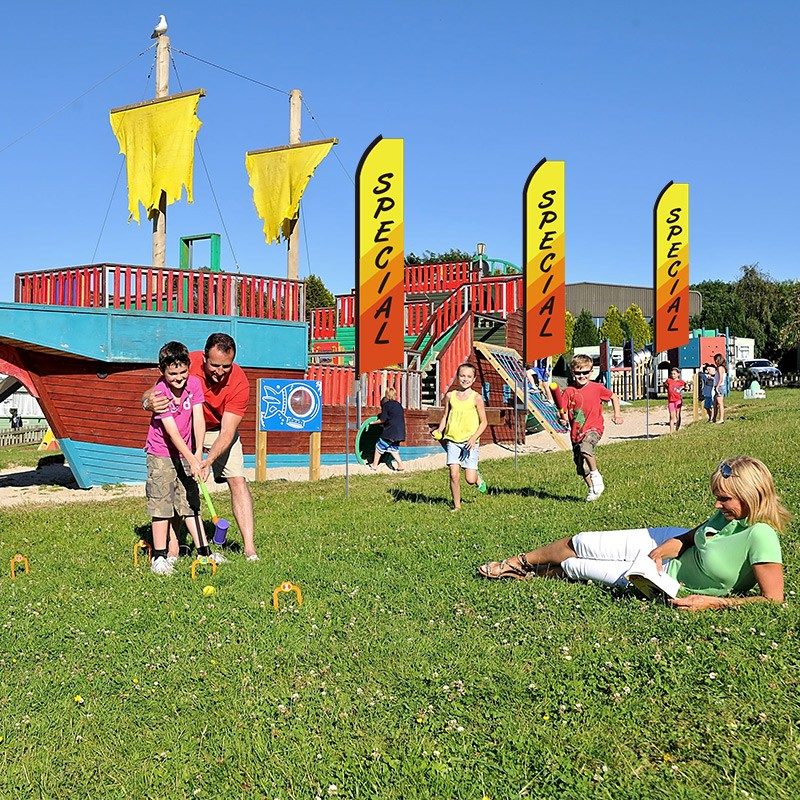
- Keep the wording to one short word or a logo, set large.
- Use bold color blocks or a simple pattern that still reads when the fabric twists.
- Save phone numbers and longer messages for a rectangle flag, which keeps its corners square.
If you want one sign that reads the same in any weather, pair your swoopers with a rectangle or teardrop flag at the entrance.
Lining up a frontage
Swoopers make the most impact in a row, and they look deliberate when they're spaced evenly along a curb or fence line. Alternate two designs, such as your logo and a single word, so passing drivers get both.
Use ground spikes along a grass verge. On asphalt or concrete, use cross bases with water bags so the row stays upright when the wind picks up. If traffic passes in both directions, order the row double-sided. For a storefront that just needs a simple daily flag, see open flags.
Swooper sizes vary; tell us where the flags will stand and ask us for the sizes we can supply.