Do you need double-sided?
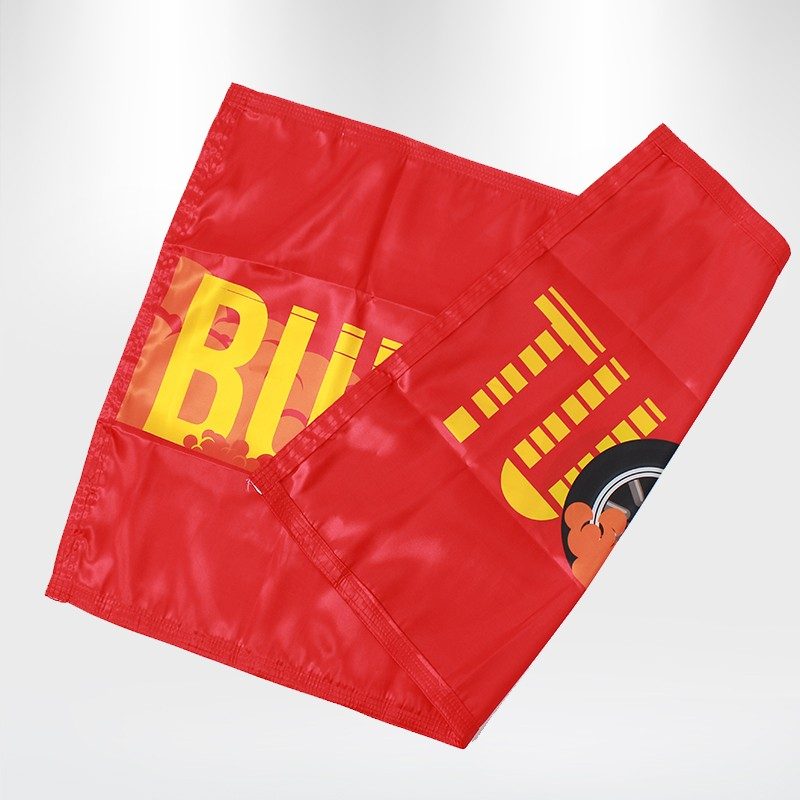
A single printed layer reads correctly from the front only. From behind, people see your design in reverse, and any words read backwards.
That's fine for a flag against a wall or at the back of a booth, or one that carries a pattern or a symmetrical symbol with no text. It's a problem for a roadside flag that drivers approach from both directions, or a flag in the middle of an event path. If people will see both faces and your design includes words, choose double-sided.
Blockout or duplex: how they differ
- Blockout: two printed layers with a blockout liner between them. Each side reads correctly, text included, and light doesn't shine through to muddle the image. It's heavier, so it needs a little more wind to fly fully.
- Duplex: one layer, printed so the design shows on both faces. The back is a mirror image of the front. It stays as light as a single-layer flag.
Choose blockout for words, phone numbers and logos with lettering. Choose duplex for color, patterns, pictures and symbols that look right either way round.
Design tips for two faces
- With duplex, keep text off the flag, or accept that it reads backwards from behind.
- With blockout, each side is laid out on its own. Ask us if you'd like different artwork front and back.
- Keep key text in the middle of the flag, clear of the curved top and the pole sleeve, on both sides.
- Check both faces on your free proof before printing.
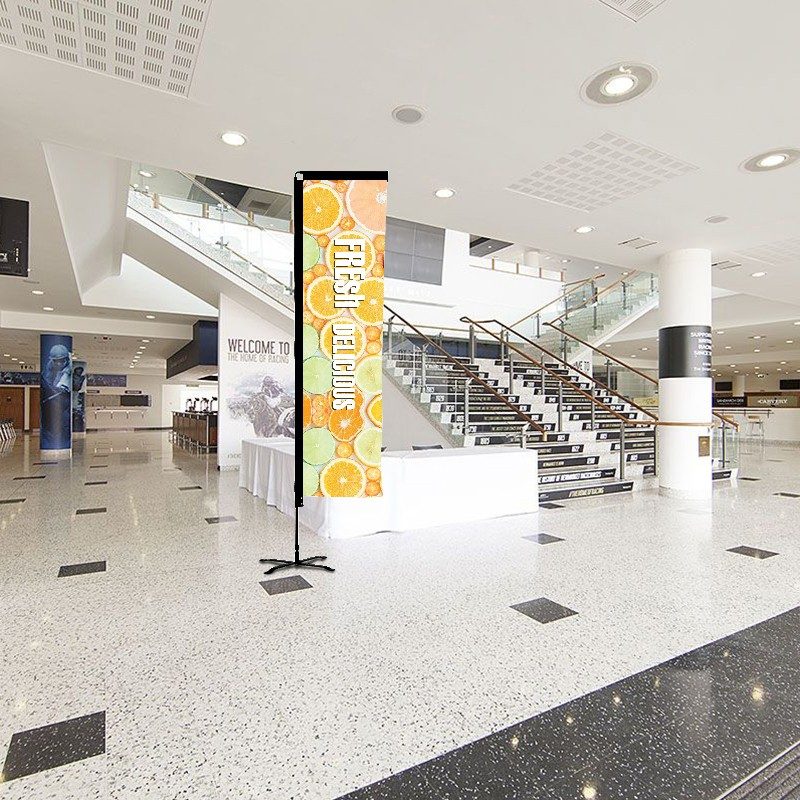
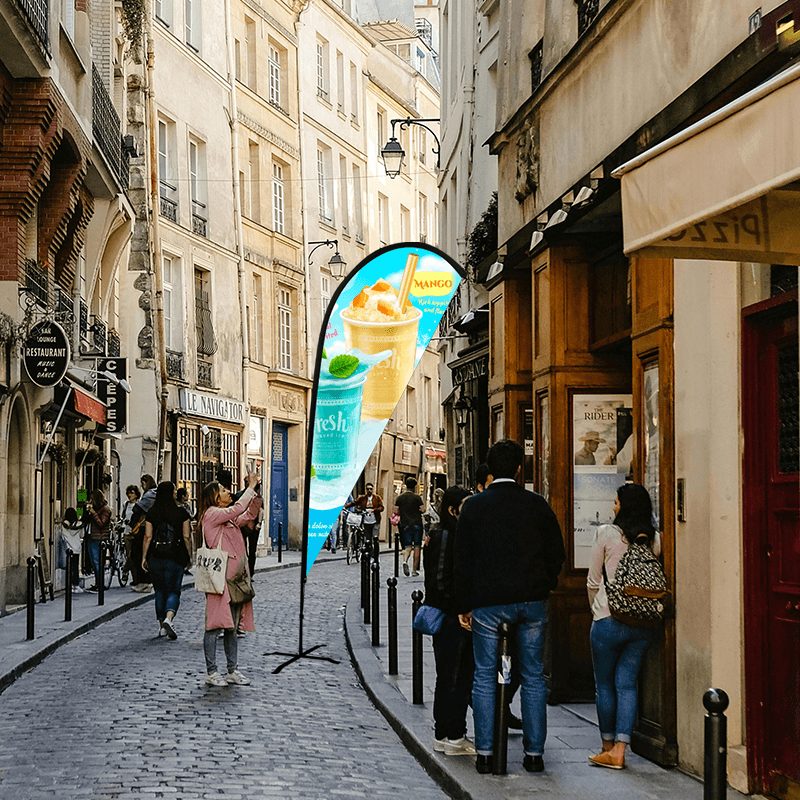
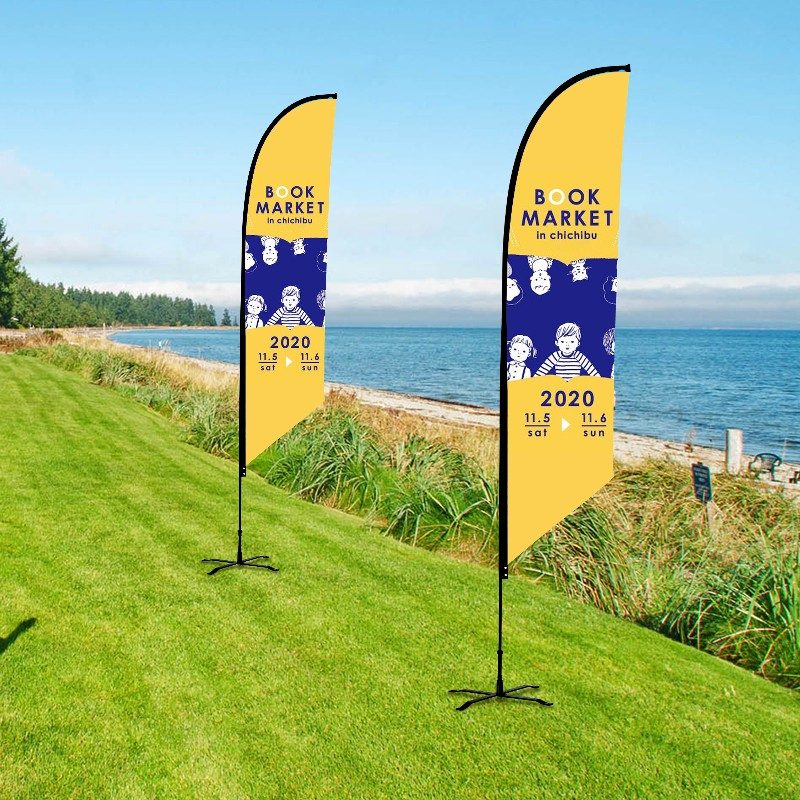
The same choice comes up on pole and wall flags; our double-sided flags page covers those. To pick a shape, start with feather flags or the text-friendly rectangle flag.