Why fabric instead of vinyl
Vinyl step and repeats are common, but they bounce camera flash back as a white hot spot, and they crease once folded. Fabric solves both:
- No glare. Dye-sublimated polyester has a matte surface, so logos stay readable in flash photos and phone shots.
- Folds for travel. It packs into a box or bag. Creases relax when the fabric is stretched on a frame, and a handheld steamer takes out the rest.
- Lighter to ship than a rolled vinyl banner of the same size.
Flame-retardant fabric is available for indoor venues, with NFPA 701 / CPAI-84 test documentation on request.
Laying out the logo pattern
The point of a step and repeat is that every photo, however it's cropped, shows a logo.
- Use a staggered pattern. Offset each row by half a logo, like bricks, so a logo falls beside every head.
- Size for a head-and-shoulders shot. Logos should read clearly in a tight crop, with several behind each person.
- Alternate two logos, such as a host and a sponsor, or a host and the event name.
- Pick one solid background color and a contrasting logo color. Busy photos and gradients compete with faces.
- Send vector logos (PDF, AI, EPS or SVG) so edges stay sharp at full size.
Free artwork help with your proof includes setting out the pattern. See our artwork guidelines for file types.
Size and setup
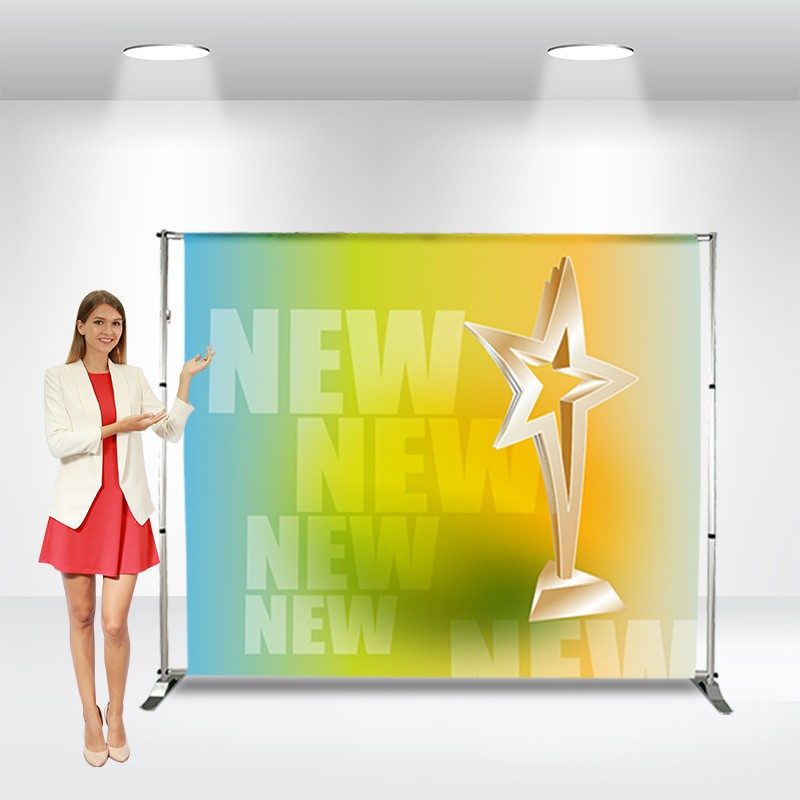
About 8×8 ft is a typical size, wide enough for a small group. Longer runs suit a red-carpet line or a press wall; ask us for the sizes we can print.
The banner hangs from a stand or frame by pole pockets or a grommet header. Tell us what you'll hang it on and we'll finish the edges to suit; if you need the stand or frame too, ask us. For a booth back wall rather than a photo wall, see trade show backdrops. Churches planning a stage or photo wall can start with church backdrops.