Polyester mesh, not vinyl mesh
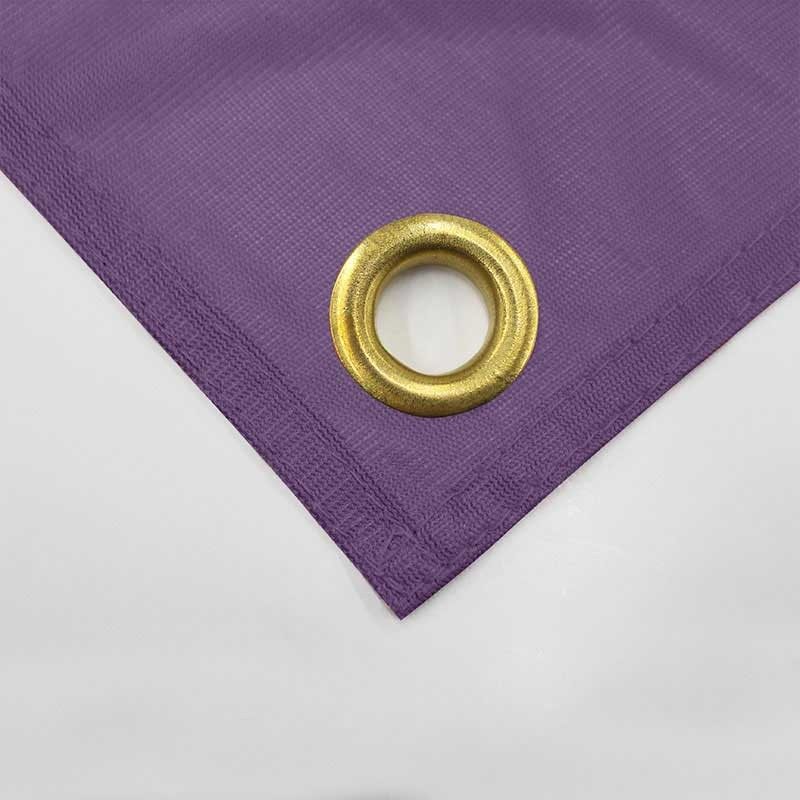
Many mesh banners sold in the US are vinyl mesh: a coated plastic sheet with small holes in it. Ours are different. They're printed on 120 g polyester mesh, a fabric with an open weave. It's light, it folds for storage, and wind passes through it, so there's less pull on the grommets, the ties and your fence.
If a league, venue or contractor has asked specifically for vinyl mesh, tell us, because that's not what we print.
Where mesh earns its place
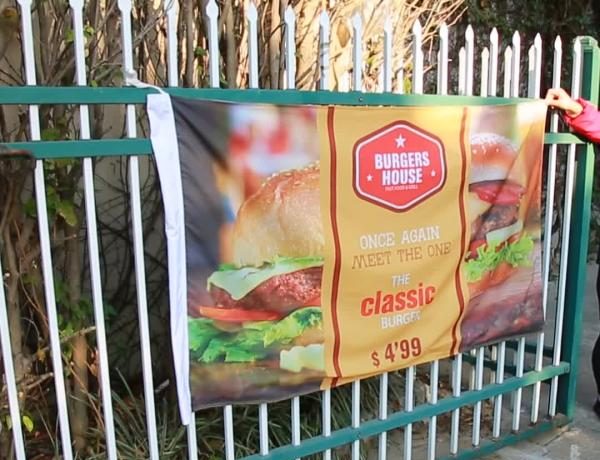
- Ballfield fences: team and sponsor banners on outfield and dugout fences, like our baseball team banners.
- Race courses: route signs and sponsor panels along barriers and fencing; see finish line banners.
- Railings and balconies: event branding that has to stay up through a gusty afternoon.
- Open sites: anywhere a solid banner would act like a sail and strain at its ties.
Indoors, or anywhere sheltered, a solid fabric banner gives deeper color. The open weave of mesh lets light through, so the print looks a little lighter up close.
Design tips for mesh
Because the weave is open, fine detail and small text soften on mesh. Use large, bold lettering and strong contrast, such as dark text on a light background or white on a deep color. Keep logos simple and give them room. A fence banner is usually read from across a field or a parking lot, so a short message does more than a long one.
Tell us the length of the fence run and the spacing of the posts, and we'll help you work out banner sizes before the proof. Our artwork guidelines cover file types and resolution.