Fabric or vinyl: which banner suits your job
Most print shops default to vinyl. We print on polyester fabric, and for many jobs it's the better match. Fabric has a soft, matte face, so it reads cleanly under gym lights, stage lights and camera flashes without the glare that vinyl picks up. It folds for storage and shipping, and it's much lighter than the same size in vinyl, so one person can hang it.
That makes fabric the natural pick for banners that hang indoors, come out year after year, or travel to events in a box or a suitcase.
Choosing the fabric and the finish
- Knitted polyester (110–130 g): light and bright, the usual choice for indoor walls and banners that move in a breeze.
- Oxford polyester (210D, 300D or 600D): a heavier weave for banners that hang outside for weeks at a time.
- Satin: a soft sheen for stage and sanctuary banners seen up close.
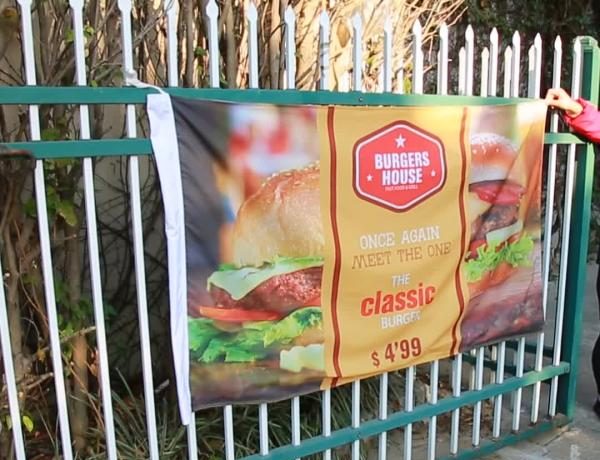
- 120 g polyester mesh: lets wind pass through on fences and open sites. See mesh banners.
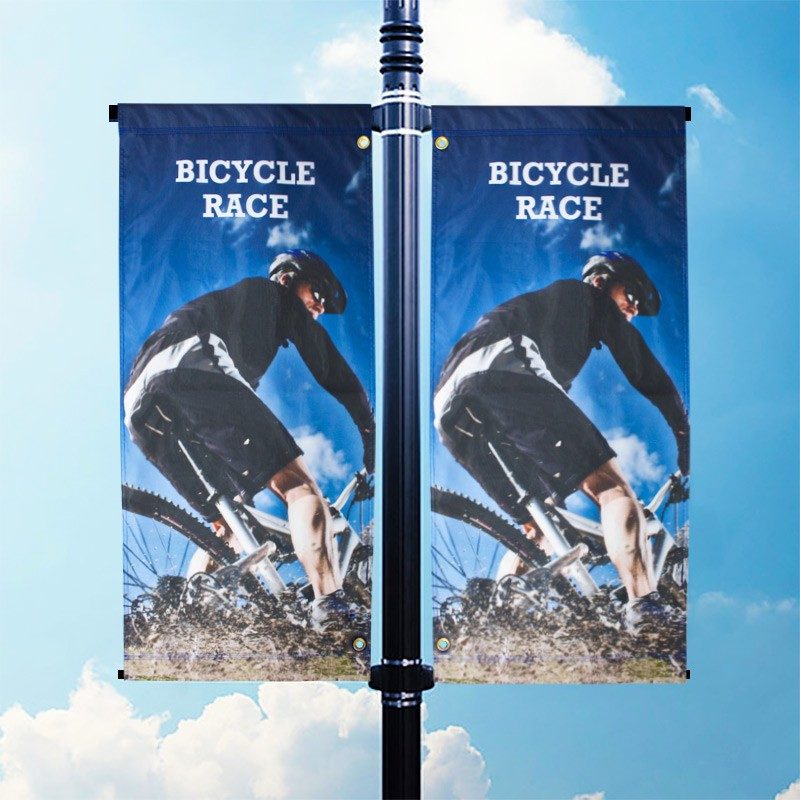
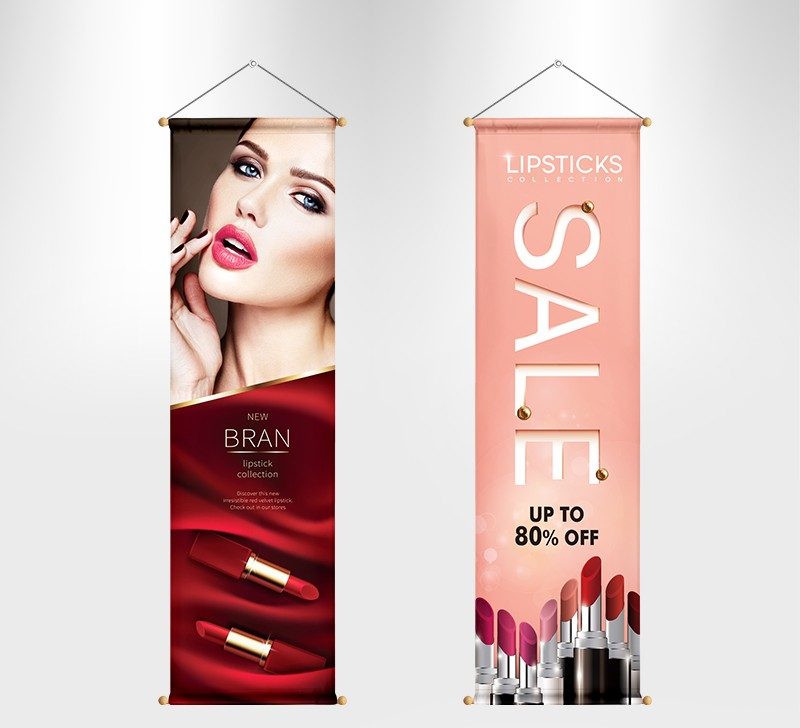
For a wall or a fence, a header with brass grommets and rope ties is the quickest way to hang. For a stand, a crossbar or a street pole, choose pockets at the top and bottom, as on our banners with pole pockets. Indoor banners for a church or a hall of fame can take fringe along the bottom edge; compare lengths and shades on the fringe colors chart.
Getting the artwork right
Measure the space before you pick a size, and keep text a little way in from the edges so hems and grommets don't cut into it. A banner read from across a room or a parking lot needs big, short wording, so put the one line that matters in the largest type.
Send PDF, AI, EPS, SVG, PNG, TIFF or JPG files, with photos at least 96 dpi at full size (200 dpi is better), in CMYK. Our free artwork help checks your file on the proof. The details are in our artwork guidelines.