We print polyester, not nylon
To be clear up front: every flag we print is polyester. We don't make nylon flags, and we don't make sewn, appliqué or embroidered flags.
The reason is the printing. Dye-sublimation turns dye into a gas that bonds with polyester fibers, so the color becomes part of the fabric rather than a layer on top. That lets us print full-color logos, photos and gradients, with Pantone (PMS) colors matched as closely as the fabric allows. Nylon doesn't take dye-sublimation the same way.
If you want a traditional sewn nylon flag, a shop that specializes in those will serve you better. If you want your own design printed in full color, polyester is the fabric for it.
Nylon vs polyester at a glance
- Nylon is light, with a natural sheen. It lifts in a gentle breeze and dries quickly, which is why it's a traditional choice for house flags.
- Knitted polyester (our standard 110–130 g flag fabric) is also light, so it flies well in a light breeze, and dye-sublimation makes its colors bright.
- Oxford polyester (210D, 300D and 600D) is a heavier woven fabric. It's more durable in strong, steady wind, but it needs more breeze to fly out.
So the honest comparison is this: nylon and our knitted polyester are both light flags for normal conditions, and oxford is the one to pick when wind is the problem.
Our flag fabrics and what each is for
- Knitted polyester, 110–130 g: the standard flag fabric. Light, bright and flies well. Used for most pole-sleeve and grommet flags.
- 100D polyester: a lighter budget fabric for hand flags, stick flags and giveaways.
- Oxford polyester, 210D, 300D and 600D: heavier and more durable, for windy sites and flags on vehicles. The D stands for denier, a measure of yarn weight; a higher number means a heavier fabric.
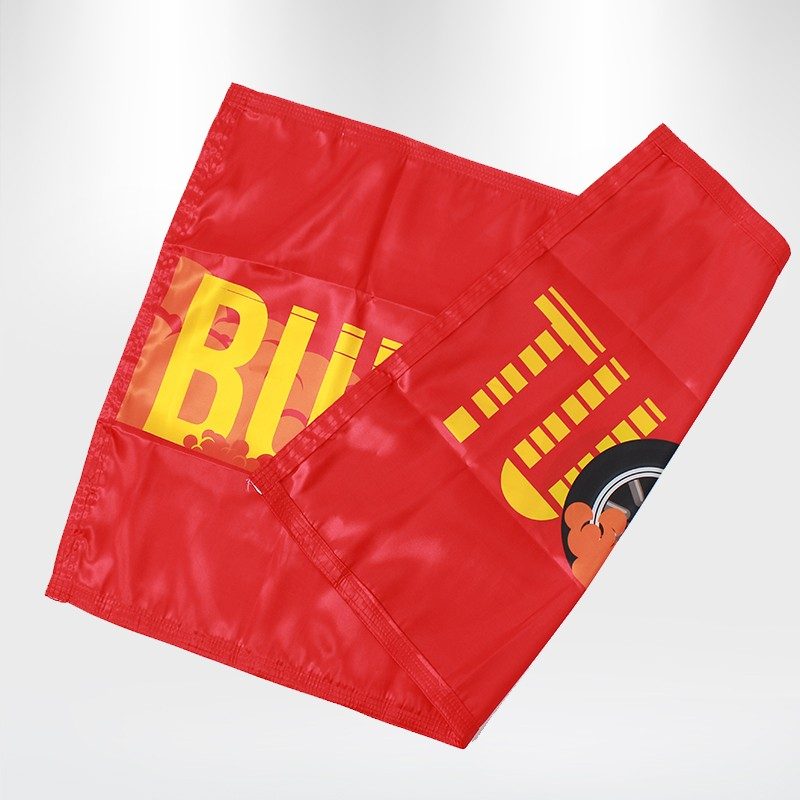
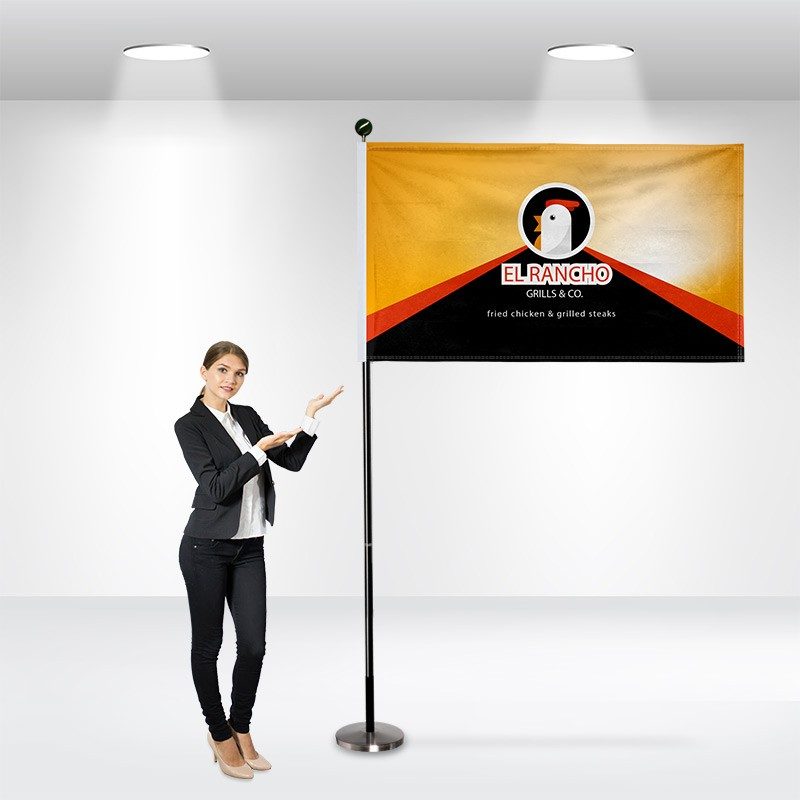
- Satin: a smooth sheen for indoor flags, color guard silks and table flags.
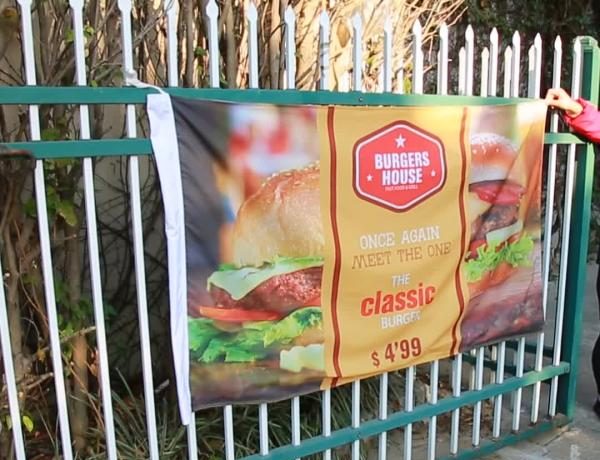
- Polyester mesh, 120 g: lets wind pass through, for fences and exposed spots. See mesh banners.
- Felt, 280 g: thick and soft, for felt pennants.
- Tension fabric, 240 g stretch: pulls tight over frames for backdrops.
- Blockout fabric: the liner inside a three-layer double sided flag, so each side reads correctly.
Choosing a fabric for your flag
- House flag on a porch or yard pole: knitted polyester.
- Coastal, hilltop or open-field site: oxford polyester, or mesh if the banner is fixed to a fence.
- Truck, boat or other moving flag: oxford polyester, and expect to replace it more often.
- Church sanctuary, school hall or office: satin or knitted polyester with a pole sleeve and fringe. See indoor flags with fringe.
- Trade show, tent or indoor display: flame-retardant fabric is available for tents, backdrops and indoor displays, with NFPA 701 or CPAI-84 test documentation on request. Ask us before you order if your venue needs it.
Every outdoor flag fades and frays over time, whatever it's made of. Taking it down in storms and checking the fly end now and then helps it last longer.