Built to be walked down a street
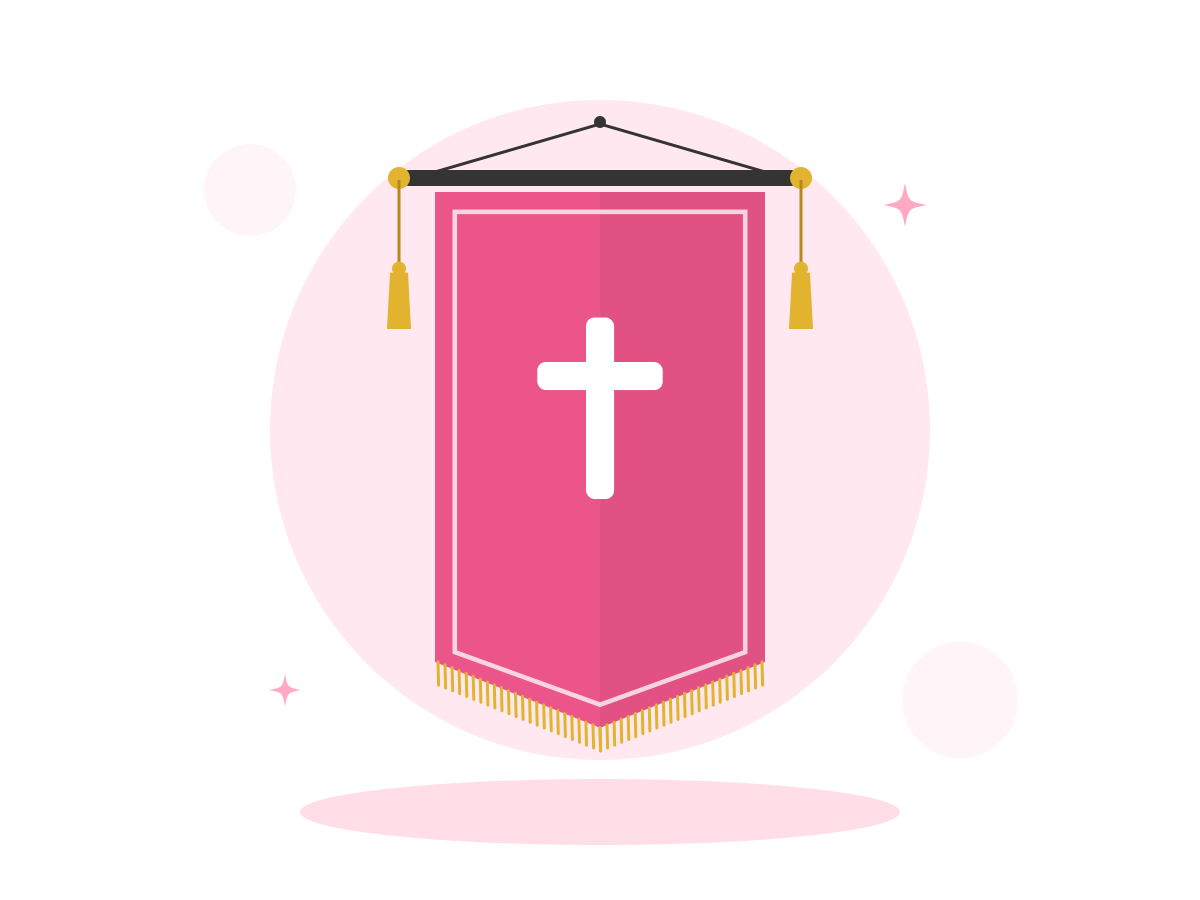
A parade banner is usually carried by two people, one at each end, on poles that run through a sleeve along the top edge. It has to stay readable while it moves and catches the wind, so three choices matter most.
- Fabric. 300D or 600D oxford polyester is heavier and more durable for a long route. On a gusty day, 120 g polyester mesh lets the wind through, so your carriers aren't wrestling a sail.
- Double-sided. Crowds line both curbs. A blockout banner has two printed layers with a liner between them, so each side reads correctly. A single-layer duplex print shows your name in mirror image on the back.
- Fringe. Gold, white or a color from your group's palette along the bottom edge gives a finished look. See the fringe colors.
Sizing and wording
Pick a width your carriers can manage for the whole route, then keep the wording short: your group's name, your town or church, and one line at most. Parade-goers see the banner for a few seconds, so letters need to be large and high-contrast. Common pole-sleeve sizes run from 2×3 to 6×10 ft, and we print custom widths for long walking banners.
For Christmas and holiday parades, leave the year off and the same banner comes out again next December. A Scripture line works well for church entries; for suggested wording we use the KJV, such as "Glory to God in the highest" (Luke 2:14).
Poles, timing and ordering
Carry poles and crossbar kits are ask us. If you already have poles, send their diameter so the sleeve fits.
Printing usually takes 1–4 business days after you approve the proof, and express shipping 2–5 business days, so most orders arrive about 1–2 weeks after approval. Allow extra time for design changes and your parade's own entry deadline. Bands can also see marching band banners, and you can request a price on the quote page.