Your crest, printed from your artwork
We print the coat of arms you send. We don't research family history or supply arms, and a surname on its own doesn't come with a coat of arms. In heraldic tradition, arms belonged to a person and passed down a family line. If your crest came from a relative, a heraldry society or an artist, make sure you have the right to reproduce that artwork.
A quick note on words: most people say "family crest" for the whole design. Strictly, the crest is the part above the helmet, and the full design is the coat of arms. We're happy to print either.
Sizes and how to display it
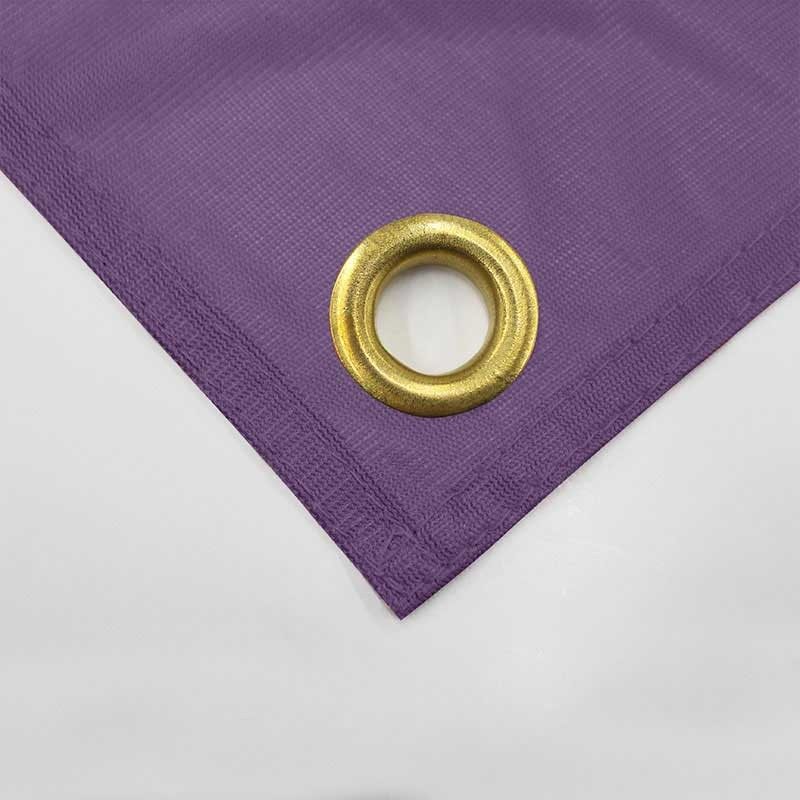
- House flagpole or bracket: 3×5 ft with a brass-grommet header, the usual house flag size.
- Tall in-ground pole: 4×6 or 5×8 ft, depending on the pole's height.
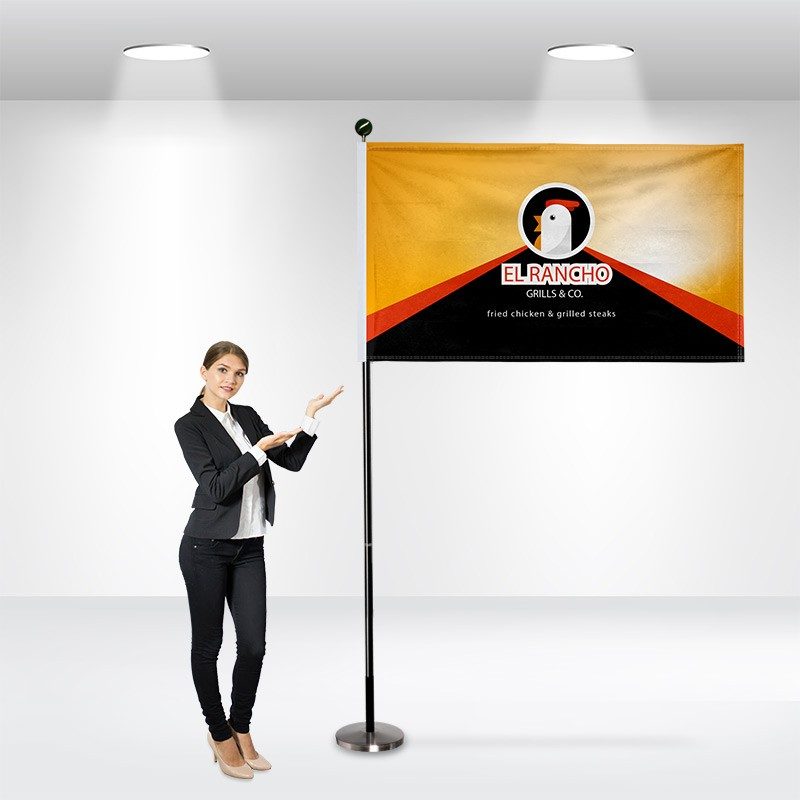
- Den, study or family room: 2×3 or 3×5 ft with a pole sleeve, finished with gold fringe for a formal look.
- Porch or garden bed: a 12×18 or 13×18 in garden flag.
- Family reunion: a large flag at the gathering, perhaps alongside a family reunion banner.
Most arms carry a motto on a scroll. On a single-layer flag the back shows a mirror image, so the motto reads backwards from behind. A blockout double sided flag reads correctly from both sides.
Getting the artwork ready
Coats of arms are full of fine detail, so file quality matters more than usual. A vector file (AI, EPS, SVG or PDF) is ideal. For a photo or scan, the image needs at least 96 dpi at full flag size, and 200 dpi is better. A phone photo of a framed print is usually too small for a 3×5 ft flag.
Free artwork help comes with every proof. Check the proof slowly: mottos are often in Latin or another language, and a missing letter is easy to overlook. Our artwork guidelines cover file types in more detail, and you can request a quote with your size and how you'll fly it.