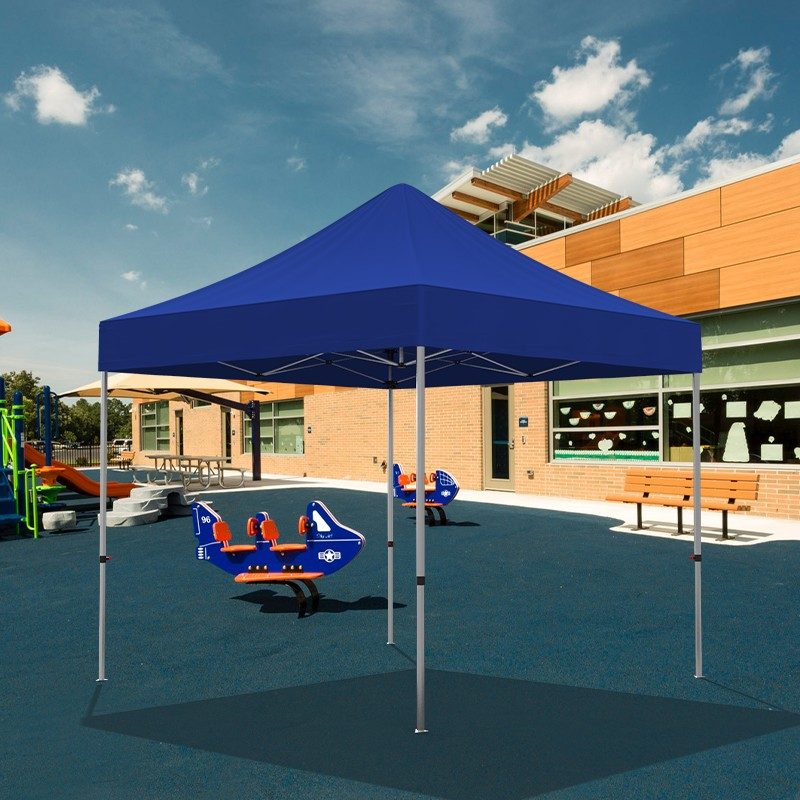
Full walls or half walls
A full wall runs from the canopy down to the ground. Use it as a back wall behind your table, or on the side that faces the sun or the wind. Because it's printed edge to edge, a full back wall works as a large backdrop for your logo, a menu or a photo spot.
A half wall covers the lower part of a side and leaves the top open. It marks the edge of your booth and carries your name where people walking past will see it, without closing you off.
Planning a wall set
Most booths use one of three set-ups:
- Back wall only: the simplest upgrade, and the one that shows up in every photo of your booth.
- Back wall and two half walls: an open, welcoming booth with branding on three sides.
- Back and side full walls: shade and shelter for long days, with the front left open.
Walls catch wind, so keep weight bags on every leg whenever walls are fitted, and take the walls down if the wind picks up. Tell us your tent size and which sides you want, and we'll show every wall on the proof so you can check what faces where.
Design tips for a printed wall
Treat the back wall like a sign: name and logo at the top, where they're seen over the heads of a crowd, with details below. Keep important text off the bottom edge, where tables and boxes hide it. Use photos at 96 dpi or more at full size (200 dpi is better), because a wall this big shows every pixel. Our artwork guidelines have the details.
Want a separate tent banner for the front of the frame or your table? See vendor booth banners and table banners. For the tent itself, see custom canopy tents.